May 11, 2013 1:44 pm
A new version of
music21
has been released, the first
public release since January. This release focuses primarily
on speed and stability improvements so it is worth an upgrade even
if none of the new features is of use to you. A summary of
what's new:
- Many improvements to Layout -- information soon, but pixel level positioning of measures can now be extracted from MusicXML files.
- Chordify addPartIdAsGroup=True works better.
- Better triplet handling in Humdrum SpineParser.
- Some .nwc files (not just .nwctxt) files can now be parsed.
- Improvements for PartStaffs (Piano scores, etc.)
- .transpose works on Key objects.
Jan 11, 2013 10:16 pm
Music21 version 1.4.0 Released
Version 1.4.0 of
music21 is released. This is a minor release on the
outside, but incorporates a number of changes that will let us do
more substantial changes in the upcoming next release. Among
the most substantial changes that people will notice are:
- Better documentation and more chapters in the User's Guide
- Ability to import Capella XML (.capx) files
- Articulations, grace notes, crescendo, and diminuendo now import in ABC (and the code is in place to bring in many more !exclamation! tags). Thanks to Dylan Nagler, Harvard Research Partner for the code.
- analysis.neoRiemannian allows for analyzing the effect of smooth voice leading on chords. Thanks to Maura Church, Harvard Research Partner for the code.
- Humdrum parsing improvements, including comments and better handling of multiple voices and importing of instruments.
- Lilypond now supports different numbers of stafflines in output
- Percussion support for MIDI and the basics of an Unpitched object type. Thanks to Ben Houge for commits.
- Improvements to chords, including a better .root() algorithm for incomplete chords, geometricNormalForm -- implements Dmitri Tymoczko's algorithm for normal form.
- More useful errors when parsing incorrect or unsupported features in several formats.
- New files in the corpus, including many 14th century scores, and the 2nd movement of Clara Schumann's Piano Trio. Female composers are hugely underrepresented in computer-readable music repertories (we couldn't find any substantial piece that was available), so we're proud to add an important work (known to many of us from the Norton Anthology of Western Music) by a great compose.
- Serialization of Streams via Pickle is much better tested and works even on large scores. See the freezeThaw module. If you're going to work with the same pieces over and over again, freeze them once and you'll load them over 3x as fast the next time you need them.
- MusicXML improvements: bowing marks are now supported as are pizzicato, etc. A bug on piano staves where one used multiple voices but the other did not has been fixed.
- Improvements to the harmony module. Thanks to Beth Hadley, MIT Undergraduate Research Assistant.
- Big speed increase on startup for people who have installed additional modules: numpy, scipy, and matplotlib are only loaded when first needed.
The next release will include support for virtualenv installs (I know people have been waiting for it, but this release included switching the entire development/commit platform, so we didn't want to change too much at once) and will have optional support for Rational number durations and offsets for perfect work with complex tuplets, etc.
In the meantime, I've been using music21 to explore similarity in fourteenth-century music to great success, so I hope to be able to share my own experiences as a user, not just a developer, of the toolkit very soon. -- Michael
Dec 18, 2012 8:48 pm
Addition and Multiplication of Intervals
I was emailing back and forth with a student research assistant
about some algebraic properties
of adding, subtracting, multiplying, and dividing intervals, and
I thought that I might share the email (in slightly revised form)
with the Net. I would be very surprised if this hasn't been
written up already by someone else, but the only things I could
find quickly about interval multiplication was all in the
12-tone/serial usage, which is less interesting to me
today.
Dec 16, 2012 2:31 pm
Litany of Ars Nova (Trecento) Saints
Lord have mercy on us
Christ have mercy on us
Lord have mercy on us.
Accept holy Trinity
This joyful cry of peace
And remove the cloud
Of horrible schism.
Holy Hildegard
Mother of Musicians
Virgin Composer --
have mercy on us.
Holy Philippe de Vitry --
pray for us
Holy Marchetto of Padua --
pray for us
Holy Guillaume de Machaut --
pray for us
Holy Jacopo da Bologna --
pray for us
Holy Giovanni da Cascia --
pray for us
Holy Master Piero --
pray for us
Blessed Egidio and Guglielmo --
pray for us
Holy Francesco the Blind --
pray for us
Holy Lorenzo of Florence --
pray for us
Holy Johannes Ciconia --
pray for us
Blessed Anthony, called Zachara of Teramo --
pray for us
Holy Matteo of Perugia --
pray for us
Holy Bartolino of Padua --
pray for us
Blessed Solage --
pray for us
Blessed Engardus --
pray for us
Holy Christine de Pizan --
pray for us
Blessed Alanus --
pray for us
Holy Baude Cordier --
pray for us
Blessed Oswald of Wolkenstein --
pray for us
Holy Prosdocimus of Beldemandis --
pray for us
All you holy composers, singers, and musicians --
pray for us
All you holy theorists and poets --
pray for us
All you scribes and compilers of manuscripts --
pray for us.
Blessed Françoise-Joseph Fétis --
pray for us
Blessed Johannes Wolf --
pray for us
Blessed Friedrich Ludwig --
pray for us
Venerable Heinrich Besseler --
pray for us
Blessed Kurt von Fischer --
pray for us
Blessed Susanne Clercx --
pray for us
Holy Nino Pirrotta --
pray for us
Blessed Billy Jim Layton --
pray for us
Blessed Giuseppe Vecchi --
pray for us
Blessed Pierluigi Petrobelli --
pray for us
All you holy scholars --
pray for us
All you thinkers about medieval composers --
pray for us
All you translators of music theory --
pray for us
All you searchers of manuscripts and fragments --
pray for us.
Lord, be merciful,
From all dissonances --
Lord, save your people
From all scribal errors --
Lord, save your people
From your tritones --
Lord, save your people
From bad ficta choices --
Lord, save your people
From a sudden and unprovided hexachordal mutation --
Lord, save your people
From the scourge of lost manuscripts --
Lord, save your people
From incorrect prolation and mensuration --
Lord, save your people
From unexplained coloration --
Lord, save your people.
By the mystery of minim equivalence,
By your dragmas,
By your custodes, --
Lord, save your people
By your ligatures of perfection,
By your ligatures of propriety,
By your ligatures of opposite propriety, --
Lord, save your people
By your alteration and imperfection,
By your dots of division, and of addition,
By your chains of perfect semibreves under
similis ante similis,
By your knowledge that what cannot be transcribed
should not be transcribed, --
Lord, save your people
On the day of publication --
Lord save your people.
Be merciful to us scholars, --
Lord hear our prayer
That you will guide us,
That you will help us discern the alignment of voices,
Through the logic of perfect consonances on strong beats,
And not invent alternative explanations for simple
transcriptions --
Lord hear our prayer
That you will grant us your Apel to discern your will, --
Lord hear our prayer
That it may please you to bring us to true transcription --
Lord hear our prayer
Guide and protect your holy universities,
Preserve in holy religion the editors at LIM, Brepols, AIM,
and all those in holy publishing houses --
Lord hear our prayer
Humble the fifteenth-century scholars,
Who assert that only complete polyphonic Mass cycles are
pleasing to you,
And those who transcribe fourteenth-century music
without rhythmic reduction --
Lord hear our prayer
Bring back to the unity of performance those who sing without
ficta,
those who choose moribund tempos, and all
those who play
shawms without thought of intonation --
Lord hear our prayer
Strengthen and preserve us at Certaldo, and Dozza, and
Novacella,
Raise our databases to the level of true understanding,
Reward all your servants with everlasting tenure --
Lord hear our prayer
Deliver our souls from indecipherable tropes, and the souls
of those who transcribe
ars subtillior,
who search in archives, and read clerical
shorthand --
Lord hear our prayer
Give and preserve the fragments not yet found,
Yield to us productivity in our sabbaticals,
Grant three beats of rest to all perfect
semibreves pausae
Never causing our Finales or Sibeliuses to think of
imperfecting them,
That it may please You to hear us and our editions,
Jesus, Son of the Living God --
Lord hear our prayer
Lamb of God, who takes away the sins of transcription --
Spare us, O Lord!
Lamb of God, who takes away the sins of musicology --
Spare us, O Lord!
Lamb of God, who takes away the sins of scholarship --
Grant us thy peace.
Christ, hear us,
Lord Jesus, hear our prayer,
Lord, have mercy on us,
Christ, have mercy on us,
Lord, have mercy on us,
Amen.
For older stories visit the Prolatio (general items) or music21 (computational musicology) blogs.
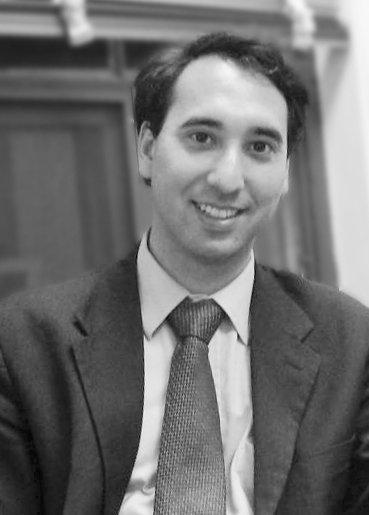
Michael Scott Cuthbert (cuthbert [at] mit.edu) is Associate Professor of Music and Homer A. Burnell Career Development Professor at M.I.T.
Cuthbert received his A.B. summa cum laude, A.M. and Ph.D. degrees from Harvard University. He spent 2004-05 at the American Academy as a Rome Prize winner in Medieval Studies, 2009-10 as Fellow at Harvard's Villa I Tatti Center for Italian Renaissance Studies in Florence, and will be a Fellow at the Radcliffe Institute in 2012-13. Prior to coming to MIT, Cuthbert was Visiting Assistant Professor on the faculties of Smith and Mount Holyoke Colleges. His teaching includes early music, music since 1900, and music theory.
Cuthbert has worked extensively on computer-aided musical analysis, fourteenth-century music, and the music of the past forty years. He is creator and principal investigator of the music21 project. He has lectured and published on fragments and palimpsests of the late Middle Ages, set analysis of Sub-Saharan African Rhythm, Minimalism, and the music of John Zorn.
Cuthbert is writing a book on Italian sacred music from the arrival of the Black Death to the end of the Great Schism.
| Download what is almost certainly an out-of-date C.V. here (last modified June 2012) 2010 Bologna Q15: the making and remaking of a musical manuscript, review for Notes 66.3 (March), pp. 656-60. 2009 "Palimpsests, Sketches, and Extracts: The Organization and Compositions of Seville 5-2-25," L’Ars Nova Italiana del Trecento 7, pp. 57–78. Der Mensural Codex St. Emmeram: Faksimile der Handschift Clm 14274 der Bayerischen Staatsbibliothek München, review for Notes 65.4 (June), pp. 252–4. 2008 2007 2006
"Generalized Set Analysis and Sub-Saharan African Rhythm? Evaluating and Expanding the Theories of Willie Anku," Journal of New Music Research (formerly Interface) 35.3, pp. 211–19. [.pdf] 2005 2001 Copyright 2010-11, Michael Scott Cuthbert. Web design by M.S.C. | Compositions: including Vasarely Patterns for the Bang on a Can All-Stars. Fonts for musicology: Ciconia (14th/15th c.) and ClarFinger (clarinet music). In my copious spare time as a junior faculty member on tenure track, I do web design and programming consulting for the National Bureau of Economic Research. Lectures on the webenChanting: Musical Artifacts in Unlikely Places, lecture March 3, 2009 Ambiguity, Process, and Information Content in Minimal Music, podcast of a lecture to Comparative Media Studies at M.I.T. The Music of John Dunstaple, iTunes podcast from a pre-concert lecture for Blue Heron Renaissance Choir. Just for fun...Biblioteca Cuthbertiana online catalog and library description Mondrian meets Finding Aids in a map of books in my former apartment. Numeric Deathmatch, a game I coded that was taught to me by Jon Wild. More fun in person, but the web interface encourages trashtalking. Javascript Timer, especially useful for timing Rubik's Cube times. Musicology Buzzword Bingo, useful for AMS meetings (requires Bach and Futura fonts) Automatic New Musicology Paper Generator based on the Dada engine The Musicology of the Fallows Catalog Pre-Facebook image archive (not indexed by Google) O L D E R web pages (may require Netscape 4.0 or older to work) |